“Pioneers of the Cantonese Community in North America” Photo Exhibition Opens in Monterey Park
「廣府人先驅開拓北美洲」圖文展蒙特利公園市揭幕
Co-hosted by the San Gabriel Valley Hom Society and the Southern California Cantonese Association, with assistance from the Chinese Railroad Workers Descendants Association, the photo exhibition Pioneers of the Cantonese Community in North America grandly opened at the Monterey Park Library in early September 2026. On display for one month, the exhibition features precious historical photographs, documents and archival materials, retracing the journey of early Cantonese ancestors who crossed the Pacific to build lives and settle in North America. It highlights the epic story of 19th-century Cantonese labourers who helped construct America’s first transcontinental railroad.
The opening ceremony was presided over by Monterey Park City Councilmember Vinh T. Ngo. Shirley Hwong, President of the San Gabriel Valley Hom Society, led the Pledge of Allegiance. Afterwards, the Society’s Vice President, Teck Kwan Miu, delivered remarks in English, welcoming elected officials, community leaders and guests. He stated that the exhibition honours the perseverance and contributions of Cantonese forebears. Through these historical records, he hopes people of all ethnicities and younger generations will learn this often-forgotten chapter of Chinese American history.
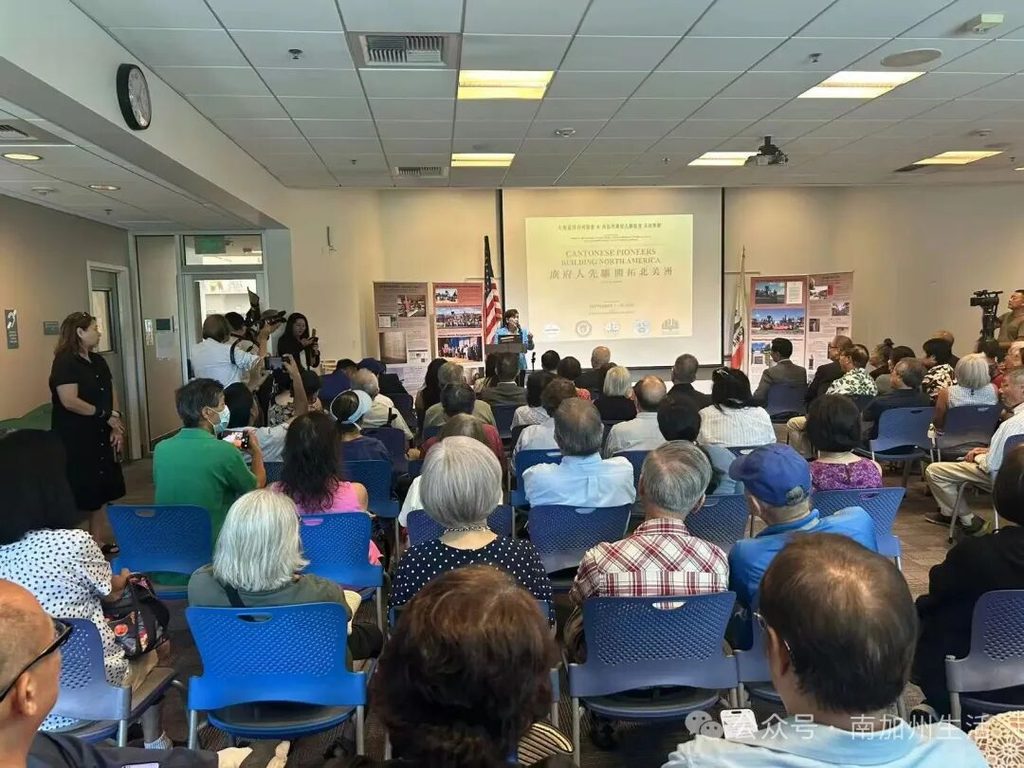
Mei Ning, President of the Southern California Cantonese Association, spoke in Cantonese. He explained that Cantonese people were among the earliest large groups of Chinese migrants to North America. Most came from the Pearl River Delta, especially the Sze Yup region: Taishan, Kaiping, Xinhui and Enping. They took part in gold mining, farming, railway construction, mining and urban services, powering the early development of the American West. Building the transcontinental railroad stands as their most enduring legacy.
Research from Stanford University’s Chinese Railroad Workers in North America Project shows the Central Pacific Railroad began hiring Chinese workers in 1864. Praised for discipline, endurance and technical aptitude, Chinese labourers quickly became the backbone of construction. At their peak, they made up nearly 90% of the workforce. An estimated 15,000 to 20,000 Chinese workers built roughly 690 miles of the western segment. Leland Stanford, President of the Central Pacific Railroad, wrote to the U.S. President in 1865 that the grand western project could not have been finished on schedule without Chinese labourers. Hundreds, possibly more than a thousand workers died during construction. Incomplete original records mean the exact death toll can no longer be confirmed.
Mei Ning noted no direct evidence proves specific construction techniques used for the Great Wall or Dujiangyan Irrigation System were brought to the American worksites. Still, thousands of years of Chinese building traditions, craftsmanship, endurance and teamwork formed the cultural foundation empowering these Cantonese workers. On April 28, 1869, a crew mainly composed of Chinese labourers set the legendary “Ten Miles of Track in One Day” record near Promontory, Utah. The feat remains famous in U.S. railroad history. It relied not merely on brute strength, but superior organisation, engineering experience and generational craft wisdom. Mei Ning thanked the Chinese Railroad Workers Descendants Association for co-organising. He pledged continued collaborative events to preserve Chinese heritage and carry forward the spirit of Cantonese pioneers.
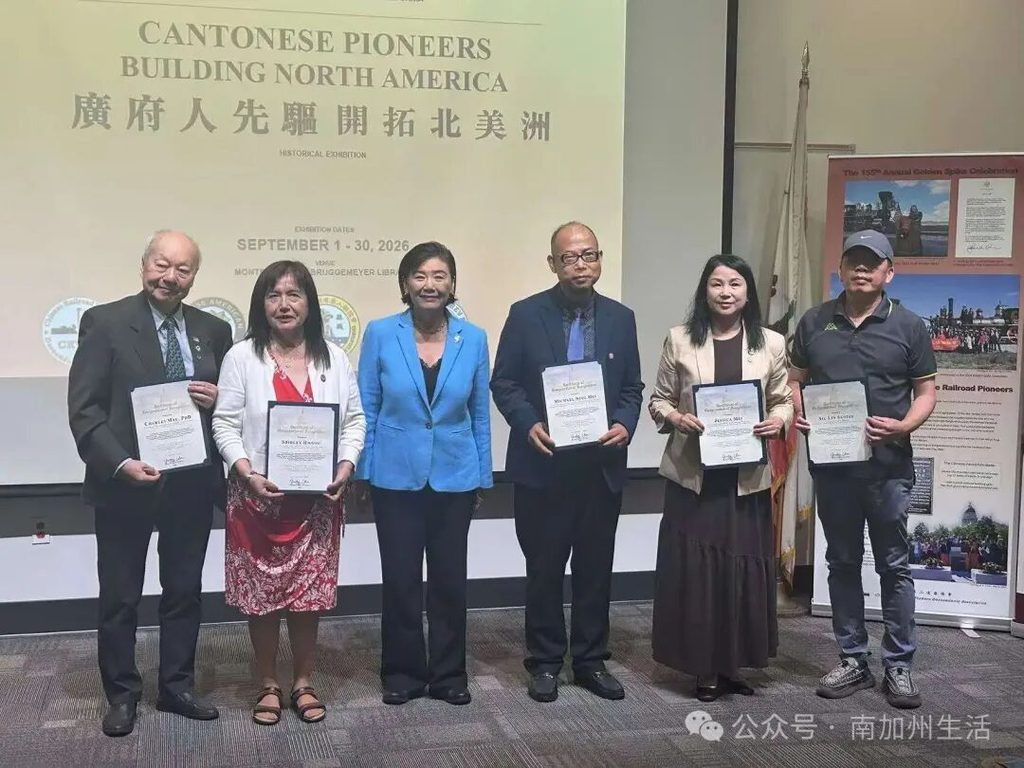
U.S. Congresswoman Judy Chu, Monterey Park Mayor Henry Lo and other elected officials and representatives attended and gave speeches. Host organisations received proclamations recognising their work preserving Chinese history and advancing multicultural exchange. Mei Hong, a descendant of railroad workers, introduced exhibits in Cantonese, sharing photos taken when descendants returned to Promontory to commemorate the “Golden Spike” rail joining ceremony.
Former State Assemblymember Michael Eng, representatives from the Chinese Historical Society of Southern California, founders and board members of the Chinese American Museum, leaders of overseas Chinese associations, calligraphers, Chinese writers and filmmakers, alongside members and directors of the two host associations and community members witnessed the exhibition opening.
由大聖蓋博谷同源會同南加州廣府人聯誼會聯合主辦、鐵路華工後裔協會協辦嘅《廣府人先驅開拓北美洲》圖文展,喺2026年9月初,喺蒙特利公園市圖書館隆重揭幕。展覽維持一個月,展出大量珍貴歷史相、文獻同文字資料,重現早期廣府先民遠渡重洋,喺北美洲打拼、落地生根嘅足跡,重點講述十九世紀廣府華工參與美國首條橫貫大陸鐵路建設嘅史事。
開幕禮由蒙特利公園市市議員吳紹榮主持,大聖蓋博谷同源會會長Shirley Hwong帶領眾人進行效忠誓辭。其後同源會副會長繆德坤上台用英語致辭,歡迎同多謝到場嘅民選官員、社區領袖同各界嘉賓。佢話,呢個展覽唔單止回顧廣府先民開拓北美嘅歷史,亦都向華人先輩堅毅精神同貢獻致敬,希望透過珍貴史料,令唔同族裔人士同年輕一代認識呢段唔應該被遺忘嘅歷史。
南加州廣府人聯誼會會長梅寧以粵語致辭。佢講,廣府人係最早大批抵達北美洲嘅華人族群之一,好多先民來自珠江三角洲,當中以台山、開平、新會、恩平四邑人居多。佢哋由淘金、務農,到起鐵路、採礦同城市服務行業,憑住勤力同堅韌,參與美國西部早期開發;而興建美國第一條橫貫大陸鐵路,就係廣府華工留低最重量嘅一頁。
據史丹福大學「北美鐵路華工研究計劃」資料,中央太平洋鐵路1864年開始聘請華工。華工憑良好紀律、耐力同施工技藝,迅速成為工程骨幹,高峰期佔施工隊伍近九成,先後一共有一萬五千至兩萬名華工參與長約690英里西段鐵路工程。鐵路總裁利蘭·斯坦福當年寫畀總統嘅報告明言,如果冇華工,就唔可以喺規定期限內完成呢項偉大工程。築路期間有數以百計甚至過千華工犧牲,惟當年冇完整紀錄,確實遇難人數已經無從稽考。
梅寧講,雖然冇直接史料證明長城、都江堰嘅個別技術傳到北美工地,但中華數千年營造文明、工匠精神,埋頭苦幹同團結協作嘅文化底蕴,支撐住呢班廣府華工克服重重難關。1869年4月28日,以華工為主力嘅工程隊創下「一日鋪軌十英里」嘅傳奇紀錄,至今仍係美國鐵路史上佳話。呢個成就唔單靠體力,仲有出色組織能力同代代相傳嘅工匠智慧。梅寧多謝鐵路華工後裔協會協辦,表明社團會繼續聯同各界,透過展覽、研究同紀念活動保存華人歷史,傳承廣府先驅精神。
聯邦眾議員趙美心、蒙特利公園市市長羅霈霆等多位民選官員同代表出席致辭,主辦單位獲頒賀狀,表揚佢哋保存華人史蹟、促進多元文化交流嘅努力。鐵路華工後裔梅紅以粵語講解展品,介紹華工後人重返普羅蒙特里「金釘」合軌紀念現場嘅故事。
前州議員伍慶國、南加州華人歷史學會、華美博物館創辦人同董事,多個僑團首長、書法家、華文作家同影視創作者,連同兩個主辦社團理事會員、社區代表一齊見證展覽揭幕。