Shocked! American Language Partner Shows Off Her “Cantonese” Skills; Netizens Realize the True Global Influence of Cantonese

外省網民惊歎粵語居然在海外影嚮力如此大
喺呢個語言交換App盛行嘅年代,好多人都會搵個外國語伴練吓英文。通常嘅劇情都係老外努力講啜啜豬、我哋雞啄英文。不過,最近有位內地網友喺HelloTalk識咗個美國筆友,個劇情反轉到令人吃驚!
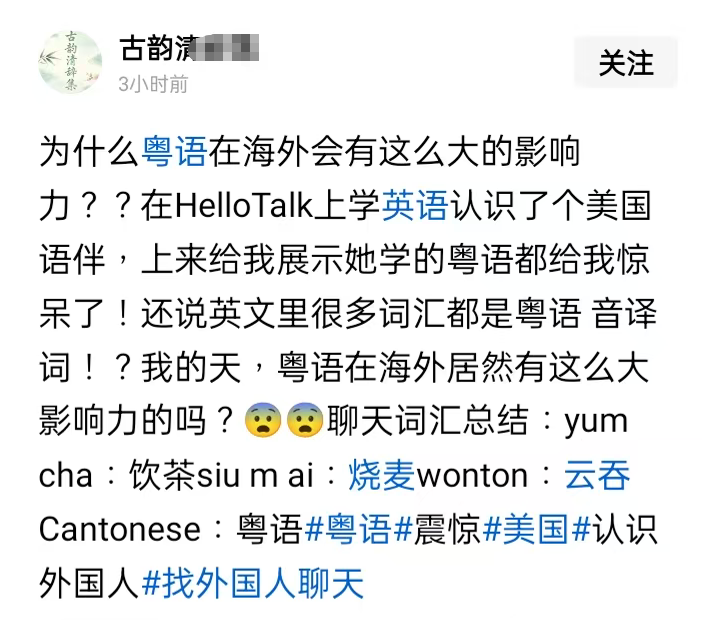
原來,個美國女仔一開聲唔係講英文,而係攞出嚟曬佢啱啱學嘅「粵語」!仲話英文入面好多字其實都係由粵語音譯過去㗎添!網友即刻嚇到擘晒口:「吓?真係咁㗎?」
為咗證明自己冇吹水,個美國女仔仲列出咗幾個聊天時用嘅「粵語詞彙」對照表:
- yum cha:飲茶
- siu mai:燒賣
- wonton:雲吞
- Cantonese:粵語
睇完之後,好多內地網民都覺得眼界大開:「嘩,原來粵語喺海外影響力咁大嘅!」
其實唔使太驚訝,粵語喺國際舞台嘅地位一向都唔低。喺舊時代,廣東、福建成為華人出海嘅主要港口,當年嘅華工將粵語帶到全世界。加上70、80年代香港電影同埋粵語流行曲(Cantopop)嘅黃金時期,鄧麗君、張學友、周潤發、成龍等巨星紅遍全球,令到粵語成為咗當時嘅「潮流語言」。
除此之外,食喺外國人心目中永遠有地位。喺國際英文菜單上,好多經典嘅粵菜名都係直接用粵語讀出嚟嘅,例如 Dim Sum(點心)、Wonton(雲吞)、Char Siu(叉燒),甚至連 Kung Pao Chicken(宮保雞丁) 都係源自於粵語發音嘅轉化。
所以話,粵語唔單止係溝通工具,更加係一種文化軟實力。下次如果你聽到老外用緊「Yum Cha」或者「Siu Mai」,記得要讚佢哋識食又識玩啊!
In today’s era of popular language exchange apps, many people look for foreign partners to practice their English. The usual scenario involves foreigners struggling with Mandarin (“Chinglish”) while we converse in broken English. However, a recent experience shared by an internet user from mainland China on HelloTalk completely flipped the script and left everyone stunned.
It turns out that this American partner didn’t start by speaking English. Instead, she proudly showed off her newly learned “Cantonese”! She even claimed that many English words are actually transliterations from Cantonese. The Chinese netizen was so shocked that they exclaimed, “What? Really?!”
To prove she wasn’t joking, the American partner even shared a mini vocabulary list of terms she used during their chat:
- yum cha: Drinking tea (a traditional Cantonese way of saying “let’s go for dim sum”)
- siu mai: A type of steamed dumpling
- wonton: A kind of soup dumpling (called “Huntun” in Mandarin)
- Cantonese: The Cantonese language itself
After seeing this, many mainland netizens were amazed: “Wow, I never knew Cantonese had such a huge influence overseas!”
Actually, there’s no need to be overly surprised. Cantonese has always held a significant position on the international stage. Historically, Guangdong and Fujian were the main departure points for Chinese immigrants. These early laborers brought the Cantonese language to every corner of the world. Moreover, during the golden ages of Hong Kong cinema and Cantopop (Cantonese pop music) in the 70s, 80s, and 90s, stars like Teresa Teng, Jacky Cheung, and Chow Yun-fat became global icons, making Cantonese the “cool language” of the era.
Additionally, food holds a special place in the hearts of foreigners. On international English menus, many classic Cantonese dishes are listed using their original Cantonese pronunciations, such as Dim Sum, Wonton, and Char Siu. Even Kung Pao Chicken has its roots in Cantonese phonetic translation.
So you see, Cantonese is not just a tool for communication; it is a form of cultural soft power. Next time you hear a foreigner using terms like “Yum Cha” or “Siu Mai,” remember to give them a thumbs up—they know how to eat and have great taste!