Why New York 86th Avenue Can Be Canton Avenue While 8th Avenue Is Named Brooklyn Chinatown Instead of Fujian Street
點解紐約86大道可以命名廣東大道,而第八大道唔可以係福建大道?
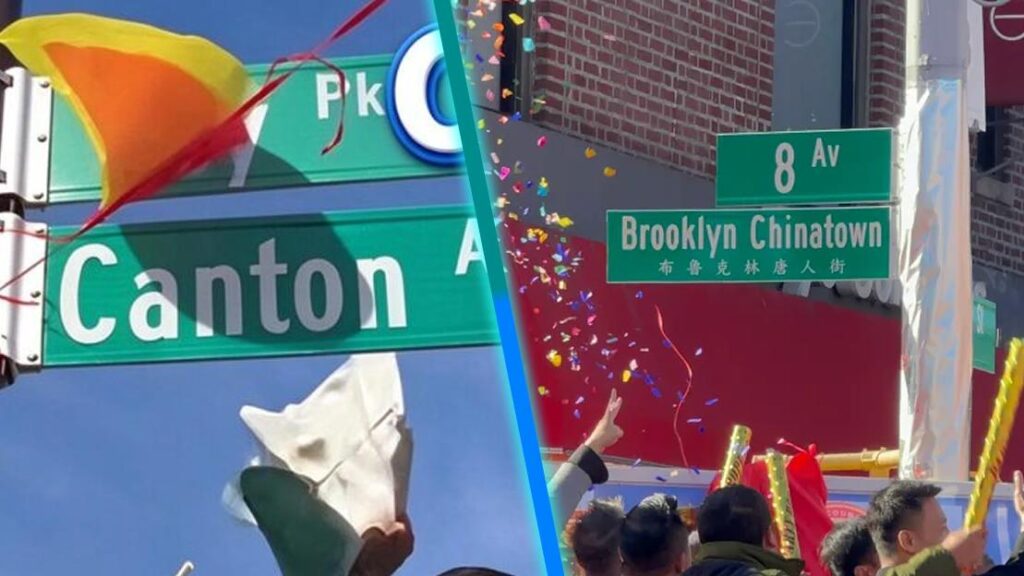
Two Chinese settlements in Brooklyn, New York, have received very different official names. Many wonder: both are Chinese enclaves, so why was 86th Avenue successfully designated Canton Avenue, while 8th Avenue, home to a majority of Fujian immigrants, was officially named Brooklyn Chinatown rather than Fujian Street?
The answer is straightforward. Streets and towns are not named after an ethnic group merely because that group makes up the largest local population. What matters is whether the community has been woven into the history of America’s founding and westward expansion, whether it has made lasting, nationwide historical contributions, and whether the name itself was already a well‑recognized symbol among Americans two centuries ago.
Cantonese‑speaking migrants arrived in North America as early as the start of the 1800s. Under the Qing dynasty’s single‑port trading policy, Guangzhou (Canton) was China’s only port open to foreign trade. For European and American merchants, sailors and gold prospectors, Canton was their first gateway to China. In early American commerce, “Canton” stood for Chinese trade, wealth and Eastern trade routes. This explains why as many as 68 towns across the United States bear the name Canton. These places were not renamed by later Chinese immigrants; Americans named them Canton long before the Gold Rush, embedding the name deep into America’s native place‑name system with widespread public recognition.
The Gold Rush and the construction of the Transcontinental Railroad mark an even more pivotal chapter. The bulk of the labour force building the treacherous western section of the Central Pacific Railroad were Cantonese Chinese labourers from Guangdong, mostly from the Wuyi region. Around 12,000 Chinese workers, accounting for over 80% of the construction crew, carved tunnels through snow mountains and built bridges along cliff edges. Their blood and sweat forged the vital transport link connecting America’s east and west coasts, transforming the United States from an Atlantic‑focused nation into a transcontinental power. This contribution went far beyond local commercial prosperity; it reshaped America’s destiny. In recent years, American academia and government bodies have gradually acknowledged this history. Therefore, when Cantonese community associations pushed for the renaming of 86th Avenue to Canton Avenue, their proposal honoured the pioneering legacy of early Chinese labourers. Backed by solid, nationally significant historical context, the proposal gained easier acceptance from the city council and community boards.
By contrast, 8th Avenue in Sunset Park is indeed a major enclave for recent Fujian immigrants, with bustling shops and tight hometown networks. However, large‑scale Fujian migration to the United States mostly began after World War II and China’s reform and opening‑up, representing a later wave within Chinese immigration history. Its prosperity is a modern, community‑level phenomenon, without foundational, nationwide contributions to America’s early infrastructure and westward expansion to justify a standalone “Fujian Street” name.
New York also has clear criteria for street co‑naming. Popular support from a large population is not enough. Officials prioritize historical significance, public acceptance and cross‑community representativeness. If streets could be named after a provincial origin simply based on which group lives there in greater numbers, ethnic neighbourhoods across New York would compete for identity‑based street names, turning place names into ethnic dividing lines and fuelling conflict. “Brooklyn Chinatown” is an inclusive, umbrella term for all Chinese people, including those from Fujian, Guangdong and other regions. It reflects the diverse makeup of the local Chinese community and minimizes controversy, which is why it was chosen.
A common misconception is that numerical dominance equals naming rights. That is not how place‑naming works in North America. Settlement creates a neighbourhood. Contributions that reshape a nation’s development and endure across generations earn a place on street signs and local history books.
Canton Avenue bears its name not because Bensonhurst has the largest Cantonese population, but because Canton and Cantonese labourers form an indelible chapter in American westward expansion. The dozens of Cantons across the United States also trace their origin to Guangzhou’s unique status as China’s sole foreign trade port in that era, a position that shaped global commerce.
This comparison is not about ranking ethnic groups. It illustrates one principle: settlement can form a community, but contributions forge a place in history.
紐約布碌侖有兩處華人聚居街,定名結果卻大相逕庭。好多人都會問:同樣係華人社區,點解86大道可以改名「廣東大道(Canton Avenue)」,而福建鄉親佔多數嘅第八大道,最後只係叫「布碌侖唐人街」,唔係「福建街」?
街道同城鎮以族群、地域命名,從來唔係睇邊個群體住得人多,重點係呢個群體有無留低足以影響當地發展嘅歷史貢獻,仲有個地名本身,早幾百年前已經係外人熟悉嘅符號。
早喺十九世紀初,廣府人已經踏足北美。當時清朝實行一口通商,全中國淨係得廣州(Canton)可以對外做生意。歐美商人、航海客、淘金者認識中國,第一個窗口就係廣州。喺早期美國商界,Canton就代表中國貿易、東方商路同財富。所以美國境內先後有68個地方叫Canton,呢啲地名唔係後來華人到咗先改,好多早喺淘金熱之前就已經由美國人命名,深深融入當地地名體系,大眾認受性本來就好高。
去到淘金熱、修建太平洋鐵路嘅時期,廣府華工嘅貢獻更加舉足輕重。貫通美國東西嘅中央太平洋鐵路西段,環境最險要,主力就係來自廣東五邑一帶嘅華工。一萬幾千名華工,佔咗築路工人八成以上,喺雪山鑿隧道、懸崖起橋,用血汗打通美國東西兩岸嘅命脈,令美國由一個東岸國家,變成橫跨兩大洋嘅大國。呢份功勞唔只係一個社區旺咁簡單,直接改寫美國嘅發展軌跡,近年亦慢慢得到美國學界同政府認可。所以廣府僑團爭取86大道冠名「廣東大道」,係紀念早期華工開拓史,有厚重歷史撐住,更容易獲得市議會同社區委員會支持。
至於日落公園第八大道,確實係福建新移民聚居地,店舖林立、鄉親網絡緊密,社區好有活力。但福建人大規模移民美國,主要係二戰之後、改革開放先開始,屬於比較後期嘅移民潮。呢度嘅繁榮,只係近代社區層面嘅聚居熱鬧,並無對美國早期基建、西部開發有全局性嘅奠基貢獻,不足以撐起單獨命名「福建街」。
而且紐約街道冠名有明確準則,唔係人多就有得改,會衡量歷史意義、公眾接受度同跨社群代表性。如果邊度人多就用邊個籍貫命名,好容易將街名變成族群分界,引發爭拗。「布碌侖唐人街」係包容嘅統稱,涵蓋福建、廣東同其他各地華人,貼合當地多元華人社區,爭議最少。
呢個對比唔係比較邊個族群優劣,只係講明一個道理:聚居可以形成社區,唯有留低深遠貢獻,先可以將名字刻上路牌,寫入歷史。